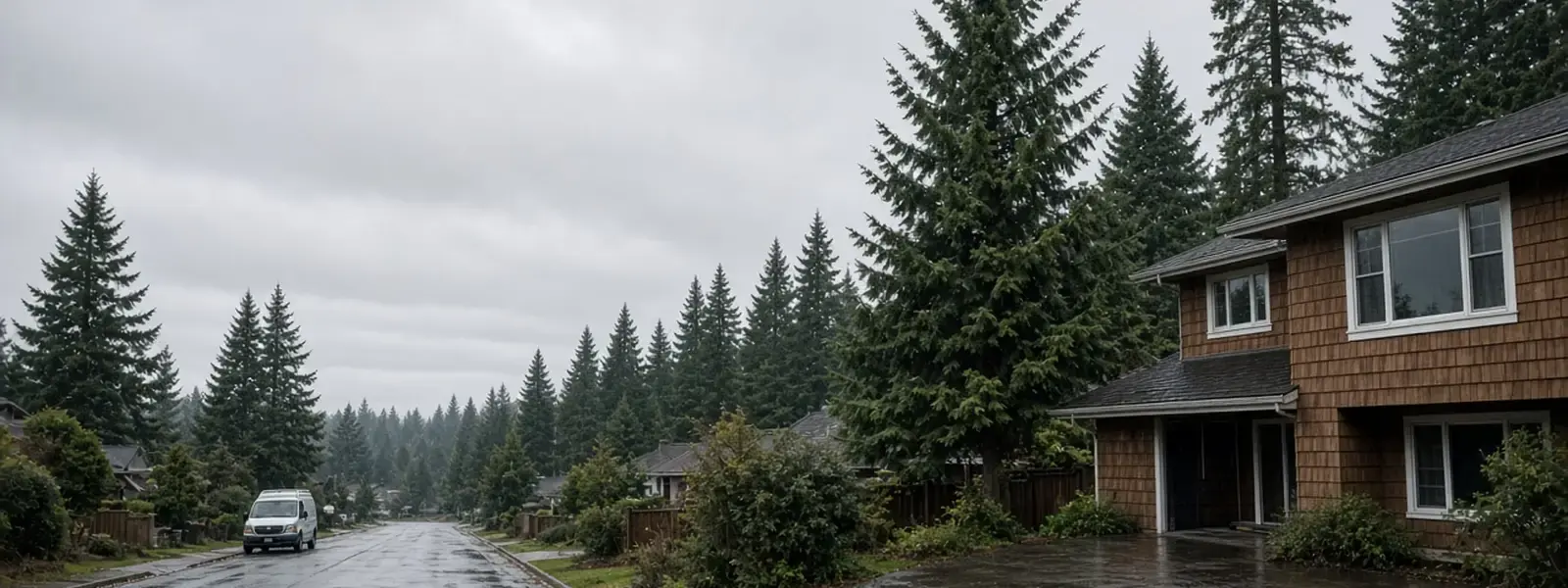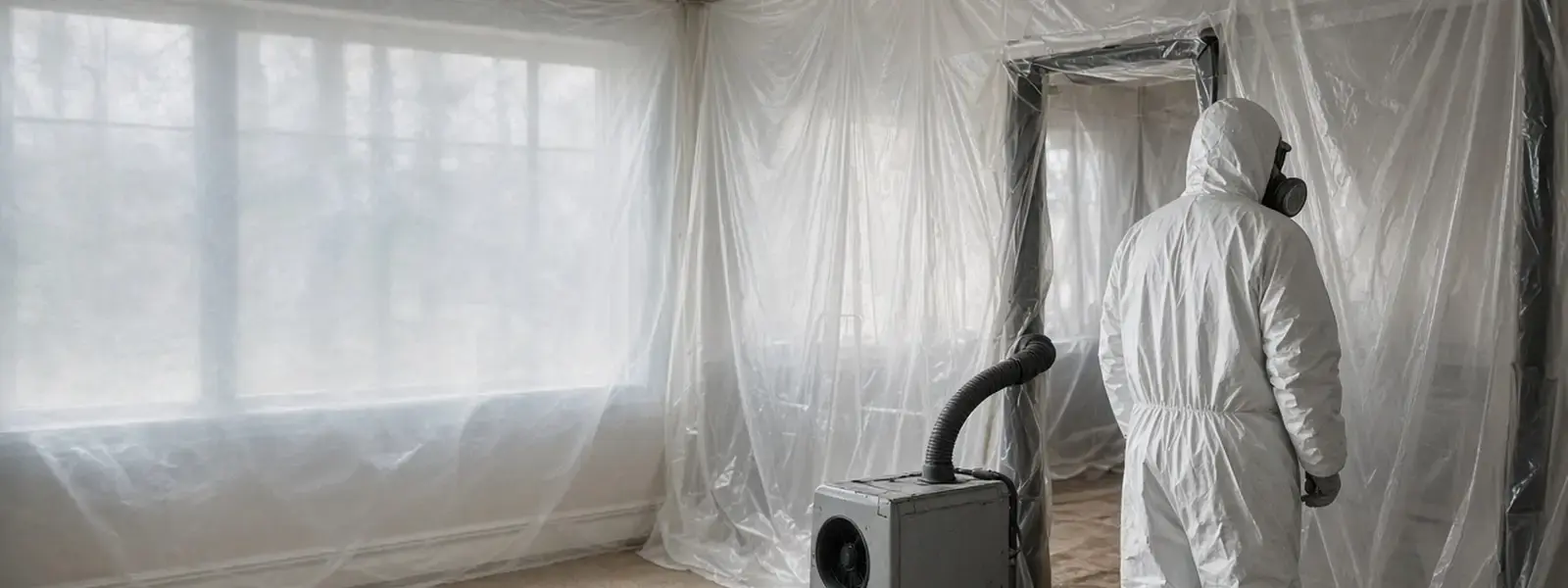
Asbestos removal in Langley is a controlled disturbance of a material that already tested positive, or that must be treated as positive until it does. The work is about fibres, negative air, and the waste leaving in labelled bags.
Mold jobs are where many homeowners meet this. The ceiling texture has to come down to open a wet bay, and the certificate came back positive. Langley Mold Remediation Services does not fold that into a casual drywall demo. The risk class under WorkSafeBC sets the controls.
Low-risk, moderate-risk, and high-risk work are not moods. They follow the material, the method, and how much is being removed. A Notice of Project is part of some of those jobs. We tell you which class the scope falls into before the poly goes up.
What the visit includes
- Review of the bulk sample certificate and the amount to be removed.
- Containment and negative air suited to the risk class.
- Wet methods so fibres are not knocked into the air dry.
- PPE and a decontamination path that matches the work.
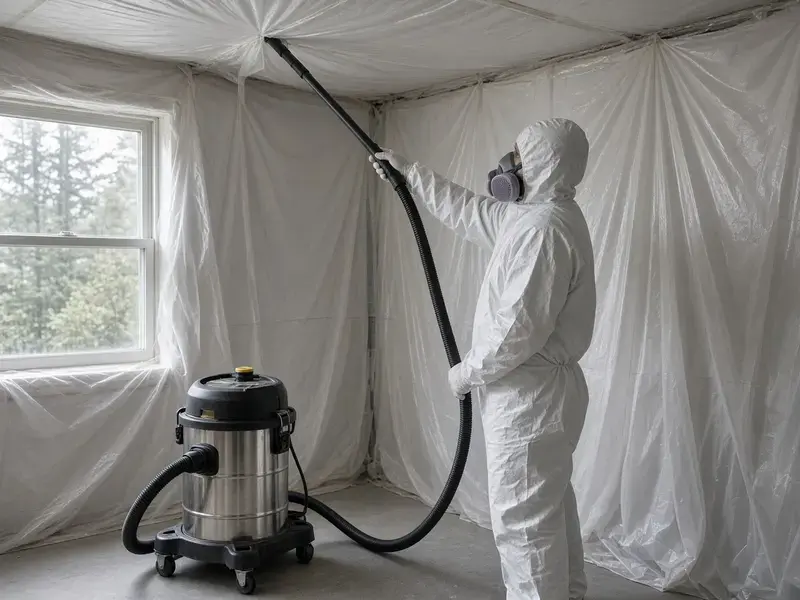
- HEPA vacuuming of the work area.
- Waste in labelled bags, disposed as asbestos waste.
- Clearance or visual completion notes as the risk class requires.
- A scope that also names the mold or water reason you opened the ceiling, so the two jobs do not fight.
When Langley houses need this
Positive popcorn over a mold stain
The texture comes off under controls, then the mold bay can be opened. Reversing that order contaminates the house.
Vinyl tile on a wet bathroom floor
Tile and mastic removed wet, with the right class of controls, before the subfloor can be dried properly.
Joint compound on a wall we have to cut
If the mud is positive, the cut is an asbestos removal, not a standard mold opening. The containment changes.
A renovation that grew into a removal
Someone started sanding and stopped. We treat the dust as a cleanup under asbestos rules, not as a shop-vac favour.
The sequence on site
1. Match the certificate to the scope
Which material, which rooms, how many square feet. The risk class is a consequence of that, not a guess.
2. Notice and setup
If the work needs a Notice of Project, it is filed before the disturbance. Containment, negative air, and waste route get built before any removal.
3. Wet removal
The material stays wet as it comes off. Dry sanding is the failure mode. Waste goes directly into bags.
4. HEPA clean
Surfaces in the work area get HEPA-vacuumed. The poly comes down in a sequence that does not shake the room out into the hall.
5. Then the mold or the dry-out
Once the asbestos material is gone and the area is cleared for the next step, the moisture work can proceed. We do not run both disturbances carelessly at once.
Why crews call this a asbestos removal job
Risk class is stated up front
You should hear low, moderate, or high, and what that means for containment, before the job starts.
Wet, bagged, labelled
Those three are the visible signs of a real removal. A garbage bag of dry scrap is not one.
We will not hide it inside a mold invoice
If asbestos controls are required, they are a scope. Folding them into 'demo' is how fibres get into a hallway.
Mold still gets done
The reason you called might be the smell. Removal of the ceiling is the gate. We still come back to the wet bay.
The building science under the stain
WorkSafeBC's asbestos rules sort activities by risk. Some small, careful removals of certain materials can fall into lower risk with specific methods. Friable sprayed texture over a large ceiling does not. We do not flatten those into one 'abatement package' with the same tent for every house. The certificate and the quantity decide.
Negative air on an asbestos containment is there to catch fibres generated by the removal. It is a cousin of the machine used on a mold job and it is not a reason to treat the procedures as identical. Waste handling, wetting, and worker protection follow the asbestos rule even when mold is the reason the ceiling is coming down.
A Notice of Project is a filing, not a slogan. When the work requires it, the job waits for that step. Starting early because the tenant is upset is how contractors get orders to stop. We would rather explain the wait.
Disposal is part of the removal. Bags go to a facility that accepts asbestos waste. They do not go in the alley bin. If you are comparing quotes, ask where the waste goes. The answer is part of the job.
Fraser Valley coverage
Asbestos Removal provides coverage for Langley and extends through the Fraser Valley. The full town list is on the Areas page.
Questions on asbestos removal
Can you remove asbestos and mold in the same week?
Often the asbestos material has to be removed under controls first, then the mold work follows. Same week is sometimes possible. Same uncontrolled afternoon is not.
Do you file a Notice of Project?
When the risk class requires it, yes. We will tell you if your scope needs one.
Is a little ceiling texture safe to scrape?
If it tested positive, no. Quantity changes the risk class. It does not make a positive material into a hobby.
Can we stay in the house?
It depends on the containment and which rooms are inside it. We will say whether the rest of the house can be lived in. High-risk work is a different conversation.
What if the lab says non-detect?
Then this scope does not apply to that material. You want mold removal or water cleanup instead, and we will switch the plan.
Bring the lab certificate to Langley Mold Remediation Services if you already have one. If you do not, start with asbestos testing. Removal without that page is a guess.