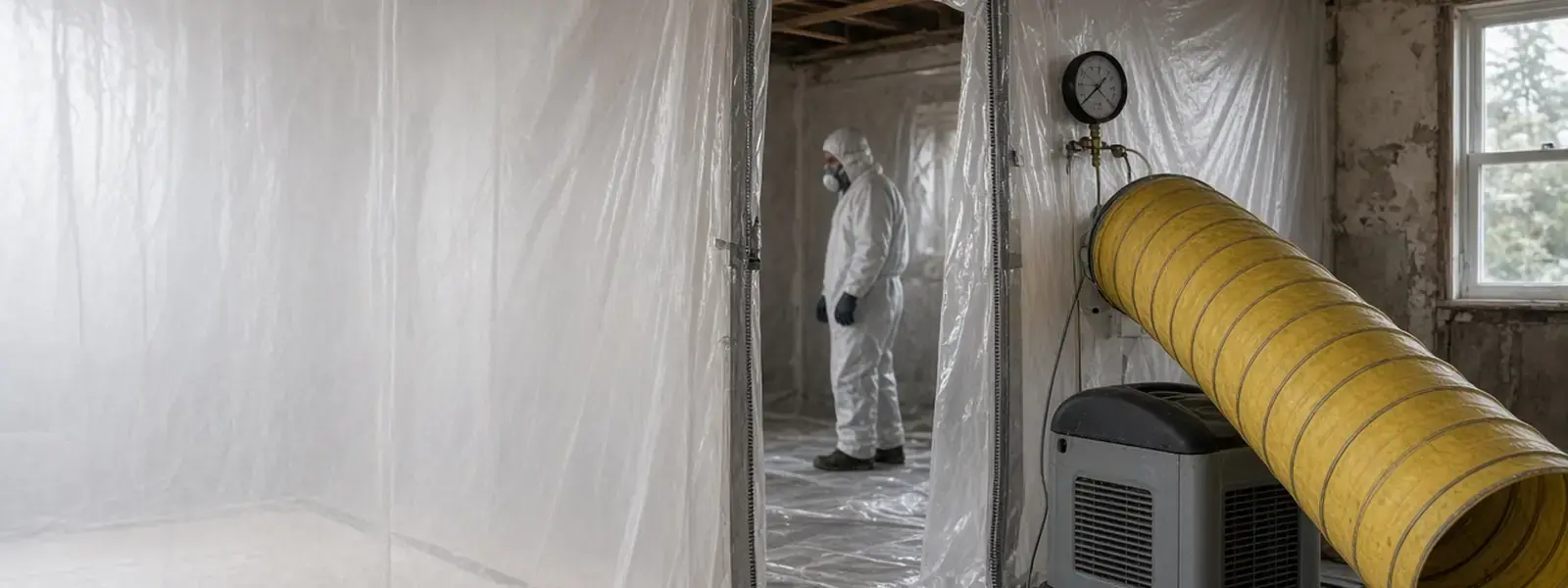
Mold remediation in Langley is the controlled version of the job. The room is isolated, the air is pulled through a HEPA filter, and the work area stays under negative pressure so dust moves into the machine instead of into the rest of the house.
People search remediation when the patch is no longer small, when an insurer wants a protocol, or when a strata does not want one unit's dust in the corridor. Langley Mold Remediation Services runs that sequence the same way on a Willoughby townhouse and a downtown Langley bungalow: contain, remove, clean, dry, then document.
IICRC S520 is the document the trade uses to sort conditions. Condition 2 is settled spores. Condition 3 is actual growth. The containment level follows the size and the condition, not a script from a brochure.
What the visit includes
- A written scope that names the rooms, the condition, and the containment level.
- Critical barriers on doors, supplies, and returns so the HVAC does not become the distribution system.
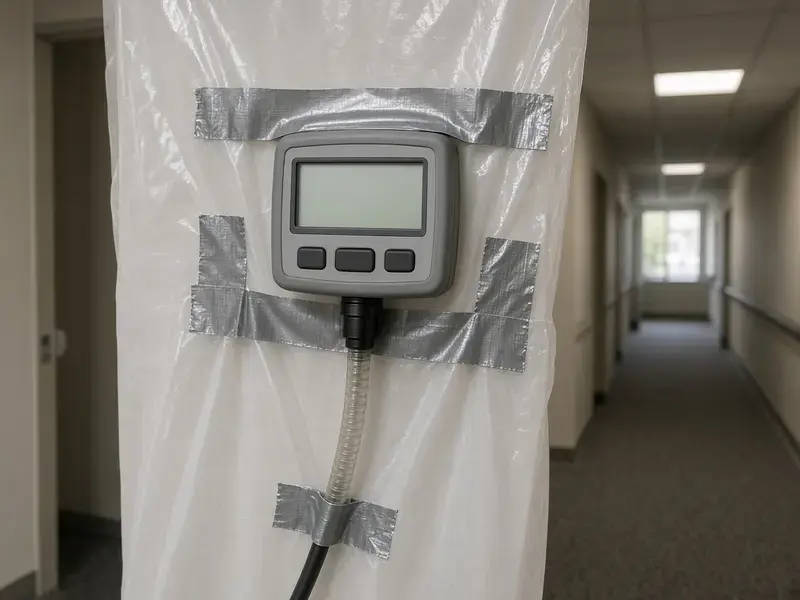
- Poly containment with a zipper and a manometer, when the area calls for it.
- Negative air sized to hold a pressure difference you can read, not just hear.
- HEPA vacuuming and damp wiping from the ceiling line down.
- Removal of porous materials that cannot be cleaned back to a sound surface.
- Drying to a measured moisture content before anyone closes the wall.
- A clearance air sample when you or the insurer wants a lab comparison.
When Langley houses need this
More than one room smells
Once growth is in a hallway and a bedroom, a trash bag and a shop vac are not a protocol. The air path between rooms is the reason remediation exists.
A strata or a property manager is involved
They usually want containment photos, a pressure reading, and a note that the corridor was protected. We build the job so that file exists.
The furnace ran during the leak
If the blower moved air while drywall was wet and growing, settled spores can be in the returns. Remediation includes the cabinet and a look at the filter, not just the stain on the wall.
Someone already demoed without a barrier
Open walls and a dusty house is a cleanup plus a remediation. We contain what is left, HEPA the settled dust, and stop the casual demo.
The sequence on site
1. Set the condition
Visual growth, moisture map, and a note on whether the HVAC was running. That decides Condition 2 versus Condition 3 and how tight the barrier needs to be.
2. Build containment
Poly, tape, zipper, and coverage of supplies and returns. A manometer tells us the work area is negative to the clean side. If the number will not hold, we find the leak in the barrier before demo starts.
3. Negative air
The machine exhausts outdoors or through a HEPA path. The goal is a steady pressure difference, not a dramatic whoosh that collapses the poly.
4. Remove and clean
Colonized porous material leaves in bags. Framing is HEPA-vacuumed and wiped. We work top to bottom so dust is not re-deposited on a clean ceiling.
5. Clear and record
When the containment comes down, an air cassette can be pulled beside an outdoor or unaffected sample. The lab report names genera and counts. That is the closeout, along with the moisture log.
Why crews call this a mold remediation job
Pressure you can read
A fan in a doorway is not negative air. We use a manometer. If the number is not there, the barrier is not done.
HVAC is isolated on purpose
Returns get covered before the first cut. A filter change is not a substitute for that.
S520 language in the notes
Adjusters and strata councils read condition and containment level. We write those words because they match the work, not because they sound technical.
Clearance is optional and real
We do not invent a pass. If you want the lab number, the cassette goes to a lab. If you do not, you still get photos and moisture readings.
The building science under the stain
Negative pressure is a small difference, often in the range of about 5 to 7 Pascals across the barrier, enough that a smoke pencil moves inward. Too much pressure tears tape and dumps the room. Too little means the sawdust leaves with the worker. The manometer is the tool that keeps the job in that band while the HEPA machine runs.
HEPA, in this trade, means the filter captures 99.97 percent of particles at 0.3 microns. A negative air machine and a HEPA vacuum are different tools. One holds the room. The other cleans the surface. Using only one of them is how a remediation looks busy and still fails a clearance.
Antimicrobial coatings are not a substitute for removal. S520 treats them as a step after the colony and the dust are gone, and only on surfaces that are clean and dry. Fogging a Condition 3 room and calling it remediation is the mistake we get asked to redo.
Langley townhouses share attics and party walls more often than people think. A remediation that ignores a shared cavity can push air into the neighbour. We look at fire stops and attic paths before the negative air machine is aimed at a wall that is not actually sealed.
Fraser Valley coverage
Mold Remediation provides coverage for Langley and extends through the Fraser Valley. The full town list is on the Areas page.
Questions on mold remediation
What is the difference between removal and remediation?
Removal is taking the colonized material out. Remediation is the containment, negative air, cleaning, and documentation around that work. Bigger or dustier jobs need the full protocol.
Do you always do a clearance test?
No. We offer it when a strata, an insurer, or you want a lab comparison. The work still includes photos and moisture readings either way.
Can we stay in the house?
Often yes, if the containment holds and the bedroom is not the work area. If the only bathroom is inside the barrier, we say so before we start.
How negative should the room be?
Enough that air leaks inward and the poly draws in slightly. We read it on a manometer rather than guessing from fan noise.
Will remediation stop the mold from coming back?
It removes the current colony and the dust. If the leak, the grade, or the humidity stays, a new colony can start. Drying and the source of water are part of the same visit.
Ask Langley Mold Remediation Services for remediation when the area is past a single soft patch. We will tell you if a smaller removal is enough.