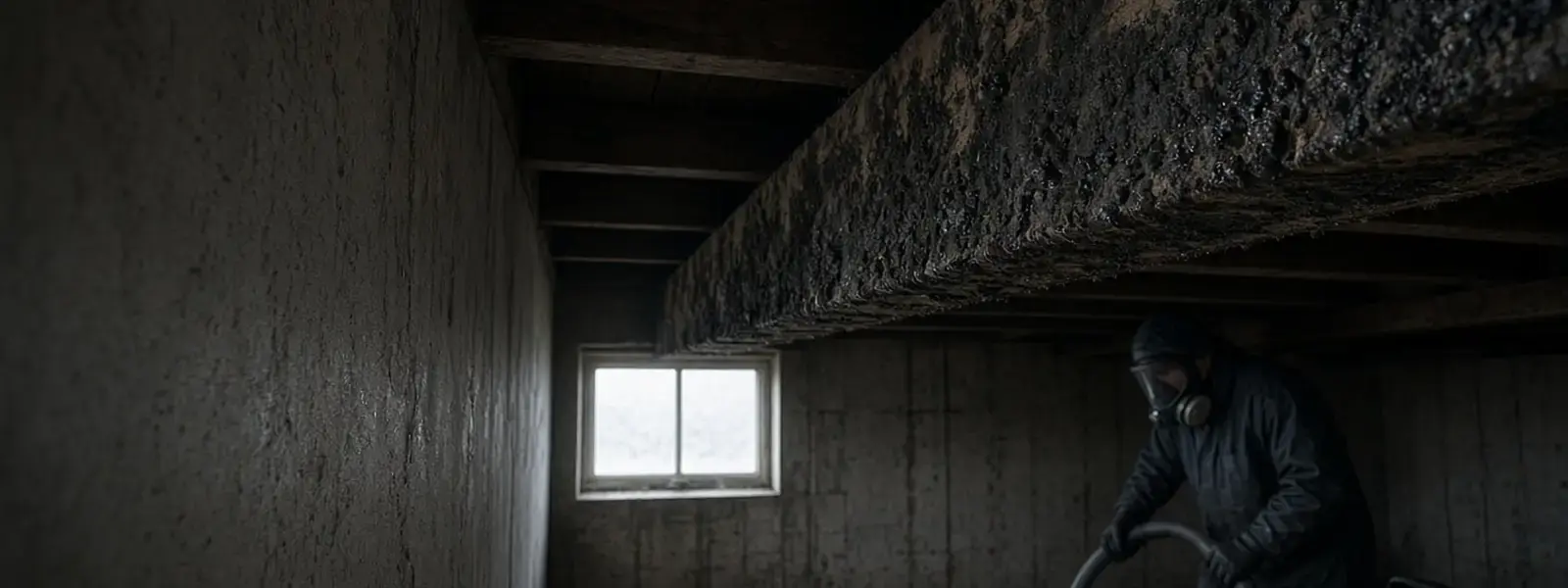
Black mold removal in Langley is a specific job, not a label for every dark streak. The fungus people mean is usually Stachybotrys chartarum. It likes cellulose that has been wet for a long time: ceiling board, drywall paper, cardboard, and the kraft face on insulation.
A lot of dark marks are Cladosporium on a cold window, soot from a candle, or dirt on a supply grille. Those are not the same organism and they are not the same tear-out. Langley Mold Remediation Services looks at texture and moisture before anyone panics over colour.
When it is the slimy black colony on a chronically wet surface, the material comes out under containment. Stachybotrys spores are sticky. They do not fly as easily as some other genera, but disturbing a wet colony without a HEPA vacuum makes a mess you then have to clean.
What the visit includes
- A look at whether the growth is slimy and on cellulose, or just a dark stain.
- Moisture readings, because Stachybotrys does not colonize dry paper.
- Containment if the colony will be disturbed beyond a tiny wipe of a hard surface.
- Removal of the wet paper-faced material, double-bagged.
- HEPA vacuum of the framing behind it.
- Drying so the replacement board does not land on a wet stud.
- Optional tape lift or air sample if you want the genus named by a lab.
- A note on the leak that kept the cellulose wet for weeks, not hours.
When Langley houses need this
A ceiling that dripped for a season
Slow roof or bathroom leaks give Stachybotrys time. The board turns dark and smears if you touch it. That board is garbage. The joists get cleaned if they are sound.
Cardboard boxes on a damp basement floor
Stored paper on concrete is a classic site. The boxes go. Then we check the wall behind them, because the same water often climbed the drywall.
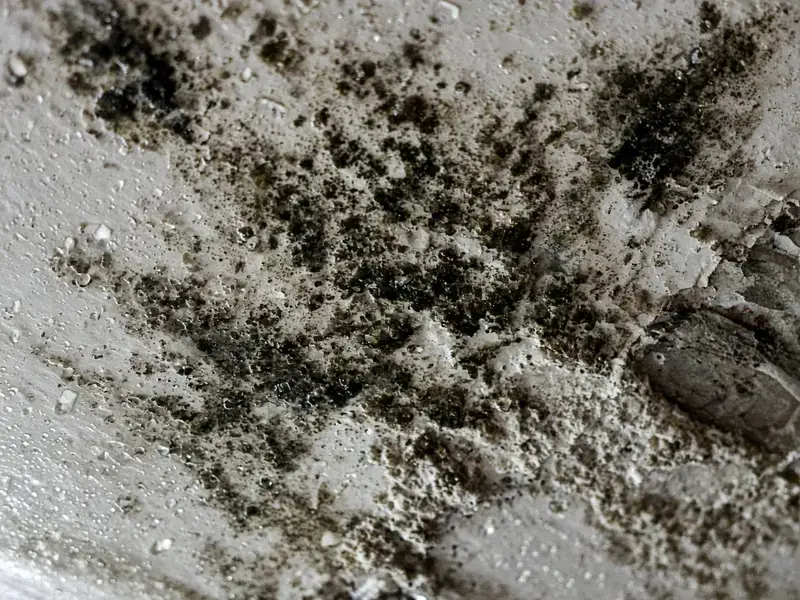
A black smear that wipes off like tar
Slimy, not powdery. Powdery black on a supply vent is often Cladosporium or just dust. The smear on wet gypsum is the one that triggers removal.
A tenant used the words black mold
We still verify. Colour is a weak test. The visit includes the meter and, if you want it, a tape lift, so the conversation is about a surface and a lab, not a rumour.
The sequence on site
1. Confirm the surface
Cellulose, long-term wet, slimy dark growth. If it fails that test, we say so and point you at the job you actually need, which might be a small clean or a leak repair.
2. Stop disturbing it dry
Scraping a dry black ceiling with no vacuum aerosolizes debris. We wet the work path only as needed for control, contain the area, and keep the HEPA on the cut.
3. Remove the cellulose
Gypsum, cardboard, and paper-faced insulation leave the house. Timber is HEPA-vacuumed. We do not 'kill' a colony in place and leave the food.
4. Find the weeks of water
This fungus is slow. A one-day spill rarely grows it. We look for the chronic leak: shower, roof, grade, or a pipe that has been sweating all winter.
5. Replace only when dry
New board goes on dry framing. If you are hiring a separate drywall crew, we leave the moisture numbers so they are not closing a wet bay.
Why crews call this a black mold removal job
We do not call every stain black mold
That phrase gets used to scare people into a whole-house gut. If it is not Stachybotrys-type growth, we will not pretend it is.
Sticky spores, careful handling
The removal is still containment and HEPA, because the colony is glued to paper that rips. Careful does not mean timid about throwing the board out.
Health talk stays factual
Some people react to damp buildings. We are not physicians and we do not diagnose you from a ceiling. We remove the wet cellulose and dry the space.
The leak is named
Black colonies mean water sat there. Leaving without naming the source is how the new ceiling grows the same thing.
The building science under the stain
Stachybotrys chartarum needs high water activity. Laboratory notes usually put that near a water activity of 0.9 or above, which is a soaked material, not a slightly humid room. That is why it shows up on ceiling board under a long leak and almost never on a dry painted wall in a ventilated room. Aspergillus and Penicillium tolerate drier surfaces and show up first.
The dark colour comes from the spores and the slime, not from a special toxin you can see. Other fungi are black too. Chaetomium is another dark cellulose fungus we see on chronically wet board, often with Stachybotrys. A tape lift separates them. Your eyes will not.
Bleach lightens the stain on a non-porous surface and does almost nothing to the roots in paper. On drywall it can also feed the myth that the problem left, because the face looks paler while the back of the sheet is untouched. Removal means the sheet leaves.
In Langley, the chronic wetting is often a bathroom above, a kickout flashing that misses the gutter, or a below-grade wall with no capillary break. Those are building faults. The black colony is the symptom that the fault has been wet for weeks.
Fraser Valley coverage
Black Mold Removal provides coverage for Langley and extends through the Fraser Valley. The full town list is on the Areas page.
Questions on black mold removal
Is all black mold toxic?
Colour does not prove a toxin, and we do not run medical tests. Chronically wet cellulose should come out either way. If you feel unwell, talk to a doctor. We will handle the building.
Can I paint over black mold?
No. If the paper is colonized, paint sits on top of food. The board has to go.
Do you test for Stachybotrys specifically?
A tape lift or air sample can be sent to a lab that identifies genera, including Stachybotrys. We can also proceed with removal when the material is obviously wet and colonized.
Why did it take so long to show up?
This type of growth needs a long wet period. A slow leak can run for weeks before the ceiling smears.
Should I leave the house?
For a contained removal of one ceiling, many people stay in the other rooms. If the colony is widespread or you already have symptoms, leaving during the demo is reasonable. We will say what the containment covers.
Send Langley Mold Remediation Services a photo of the smear and say how long that ceiling has been wet. We will tell you if it is a removal or a false alarm.