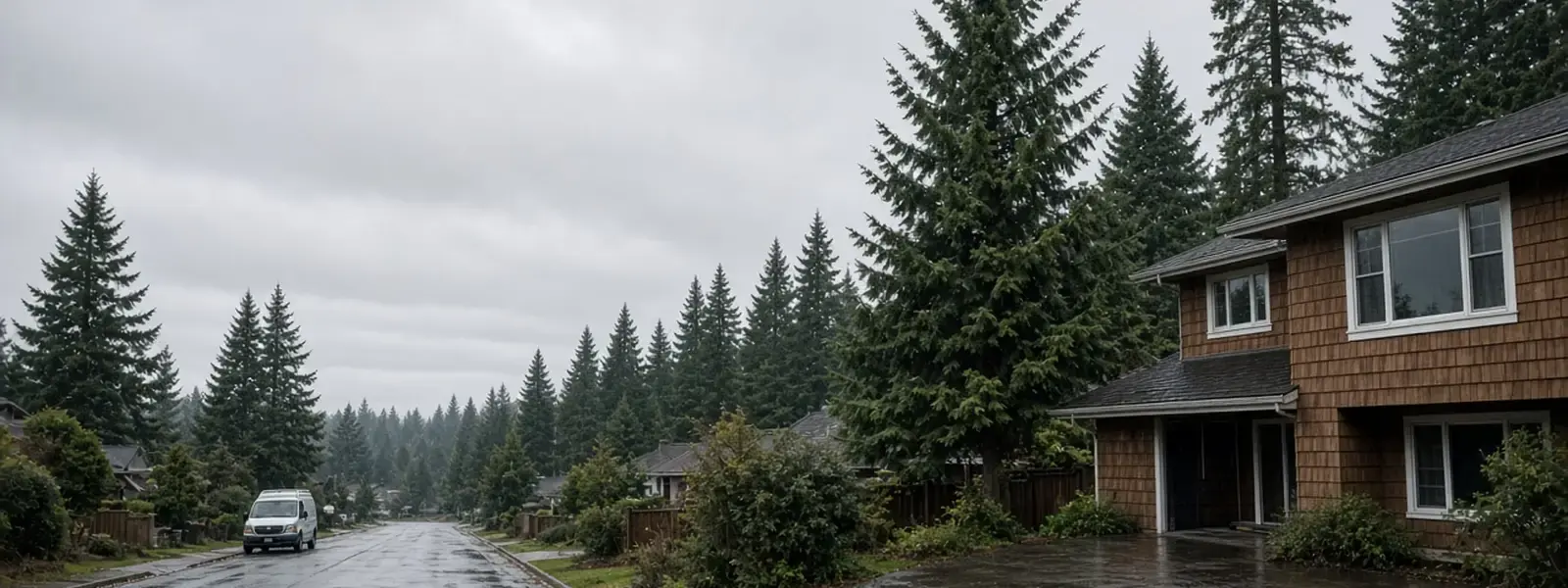
Water damage restoration in Langley is a drying project with a paper trail. Water comes out, the air gets managed, and the wood gets metered until it is actually dry. Mold is what happens when that sequence starts late.
A supply line, a dishwasher, a roof, or a sewer backup each wet a house differently. Clean water and category 3 water are not the same tear-out. Langley Mold Remediation Services classifies the water before we start saving carpet.
Insurers in the Fraser Valley ask for photos, a sketch, and daily moisture numbers. We keep that log because the dry-out is the claim, not a mystery.
What the visit includes
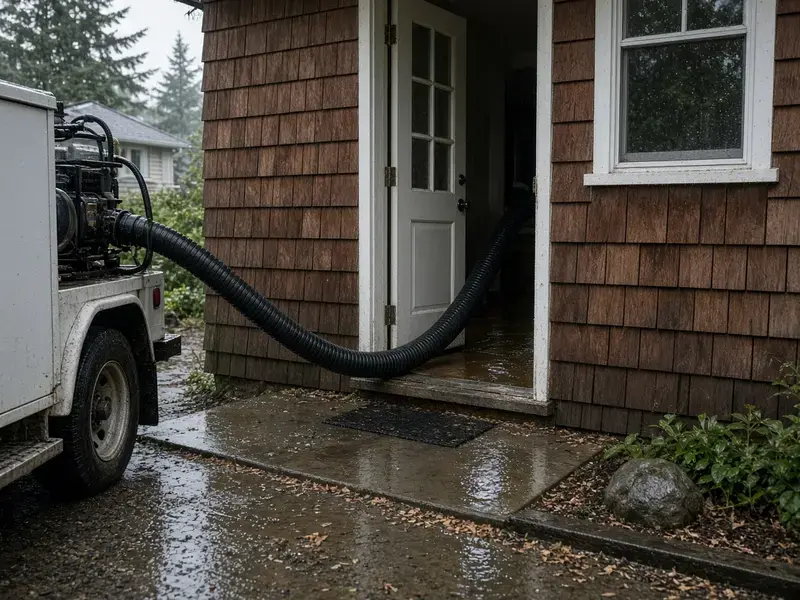
- Extraction of standing water with weighted tools or a truck-mounted unit when the volume calls for it.
- Classification of the water and the wet materials.
- Moisture map of floors, walls, and cabinets.
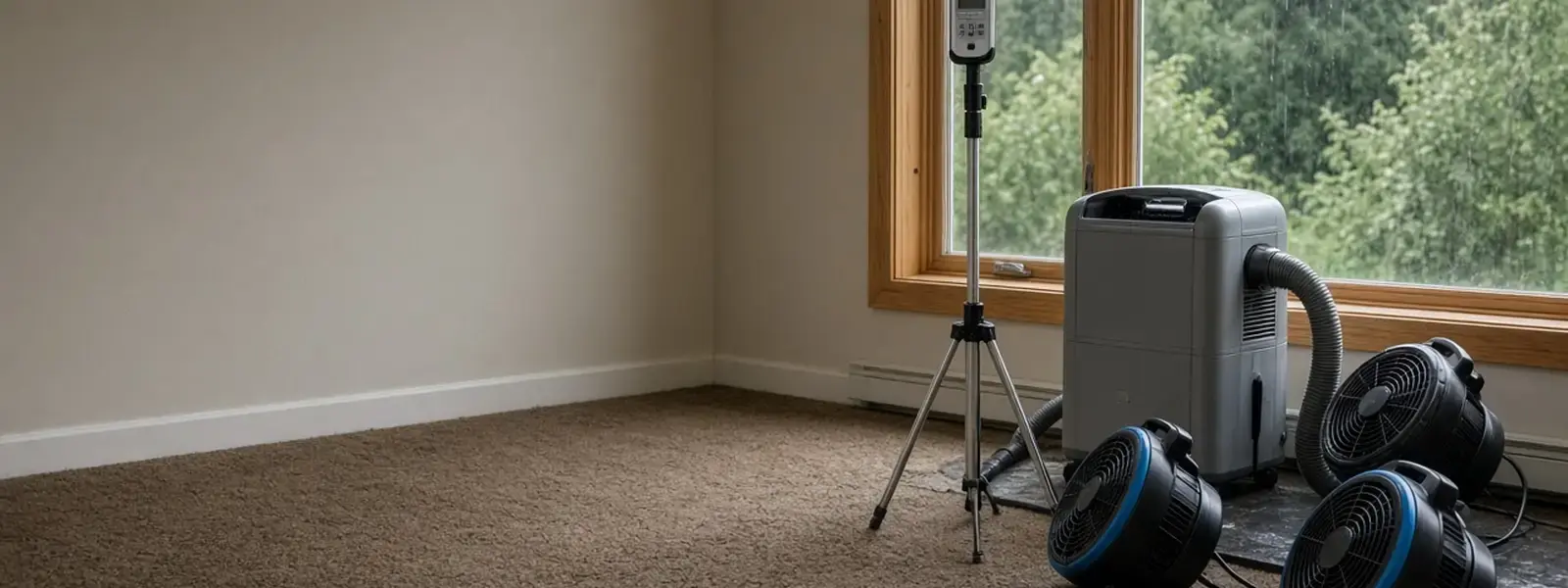
- Air movers and LGR dehumidifiers placed for the room, not lined up for a photo.
- Daily or regular psychrometric readings: temperature, relative humidity, and grains.
- Removal of materials that will not dry cleanly, especially cushion and swollen particle board.
- Content moves so furniture is not dried into the carpet.
- A drying log you can send to an adjuster.
When Langley houses need this
A burst supply or a failed washing machine
Clean water, fast extraction, and a real chance of saving the floor if we see it while it is still wet. Particle-board cabinets are the usual loss.
A roof leak during a November rain
Ceiling, insulation, and a top-floor wall. We extract what we can, pull wet insulation, and dry the cavity. Attic staining gets looked at in the same visit.
Dishwasher or fridge line
The water runs under the kitchen and into the dining room along the subfloor. We map past the visible edge. Kitchens always travel farther than the puddle.
You already smell the start of mold
Restoration and mold removal overlap once paper has been wet for days. We will say if the job has crossed that line instead of running fans on a colony.
The sequence on site
1. Make it safe and stop the water
If the source is still running, that gets shut first. Power and wet floors get a careful look. We are not electricians, and we will not energize a soaked room to prove a point.
2. Extract
Standing water leaves before fans do anything useful. Fans on a puddle just humidify the house.
3. Map and set equipment
Air movers for evaporation, LGR dehumidifiers to pull the grains down. The target is grain depression, a drier air mass than the wet materials, so the water actually leaves the wood.
4. Monitor
Readings over the following days. Equipment moves as areas dry. A room that is dry does not need a fan aimed at it for sport.
5. Release a log
Start readings, end readings, and photos. If something will not dry, the log says it was removed or that it needs another trade.
Why crews call this a water damage restoration job
Psychrometrics, not a fan count
Six fans in a closed wet room without a dehumidifier can drive moisture into the walls. We manage grains.
IICRC S500 is the reference
Water category, class of loss, and drying goals get written in that language because adjusters read it. The work matches the words.
Particle board is called early
Cabinets and some underlayment swell and do not return. We say so on day one when we can, not after a week of false hope.
Mold gets named if it has started
We will not dry a colonized wall and call it restoration. The scope changes, and you hear that out loud.
The building science under the stain
LGR means low-grain refrigerant. These dehumidifiers keep removing water when the air is already fairly dry, which is the back half of a dry-out. A hardware-store dehumidifier often quits being useful before the studs are done. That gap is why restoration equipment looks oversized for the puddle you remember.
Grain depression is the difference between the humidity ratio of the air and what the wet material wants to hold. If the air is not drier than the wall, the fans only circulate. We record grains so the log shows the air was actually working.
Category 3 water, including sewage and river floodwater, changes the tear-out. Porous materials that touched it generally leave. We do not 'save' a sewage-soaked pad because it might dry. Langley basement floods from a backed-up drain fall into this conversation fast.
Hardwood can sometimes be dried in place if it has not cupped past recovery and the subfloor is manageable. We meter both. A sand-and-refinish later is a flooring decision. Our job is to stop the water and document what the boards did.
Fraser Valley coverage
Water Damage Restoration provides coverage for Langley and extends through the Fraser Valley. The full town list is on the Areas page.
Questions on water damage restoration
How fast should water damage restoration start?
As soon as you can reach us. The line is open day and night. We do not promise a clock time. Sooner is better because mold and swelling are time problems.
Do you bill my insurance directly?
We document the loss in a way insurers ask for. Payment arrangements depend on the policy and the adjuster. We do not promise that a carrier will pay.
Can the carpet be saved?
Clean water, a synthetic carpet, and a dry pad sometimes yes. A wet pad, category 3 water, or a smell means the pad goes. We decide after it is lifted.
Why are there so many machines?
Evaporation without dehumidification just moves the water into the air and into other materials. The count follows the room volume and how wet the assembly is.
Will this turn into mold removal?
If the materials stayed wet for days, maybe. We will tell you when the scope changes. Drying and removal are neighbours, not the same invoice line by default.
If water is still on the floor, call Langley Mold Remediation Services and say where it came from. Extraction is the first hour that matters.