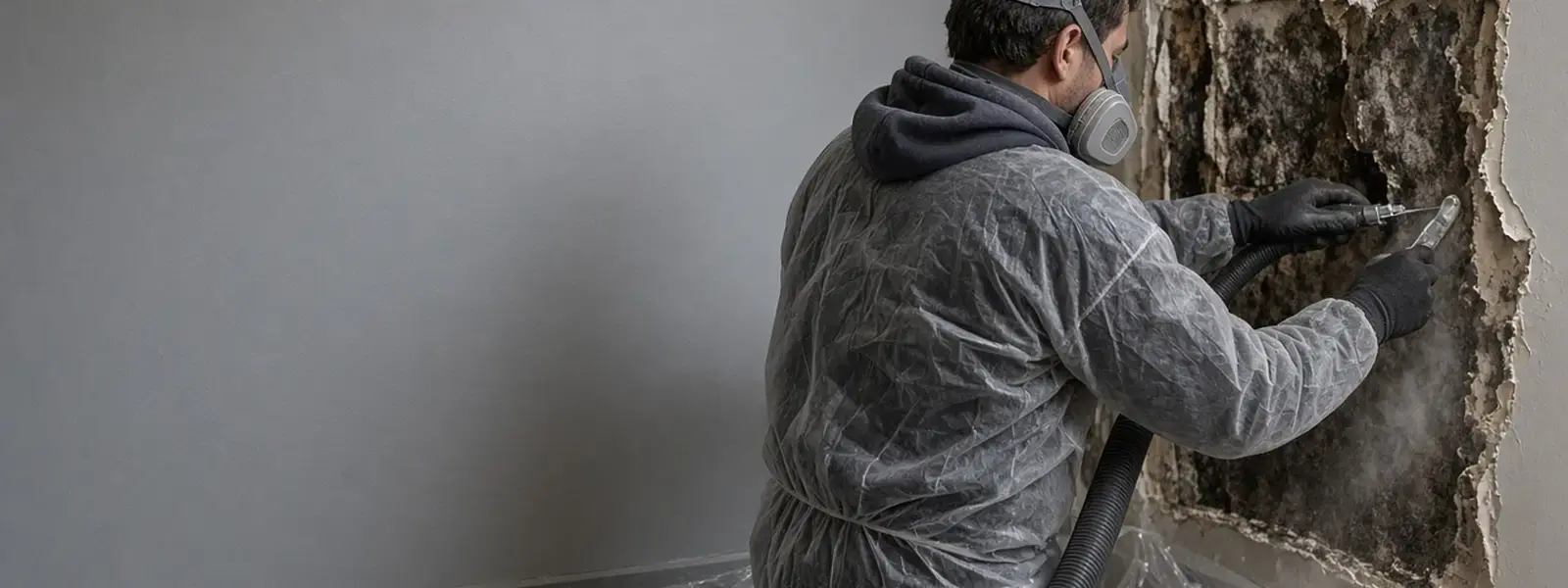
Mold removal in Langley means the colony comes out of the house, not that someone fogged a room and left. If drywall, carpet, or ceiling board is colonized, it gets cut, bagged, and HEPA-vacuumed. Wiping a stain and painting over it leaves the food source in the wall.
Most of these calls start the same way. A closet smells sweet, a baseboard feels soft, or a tenant in a basement suite says the bedroom has been musty since the fall rains. Langley Mold Remediation Services maps the wet area first, then removes only the material that is actually growing.
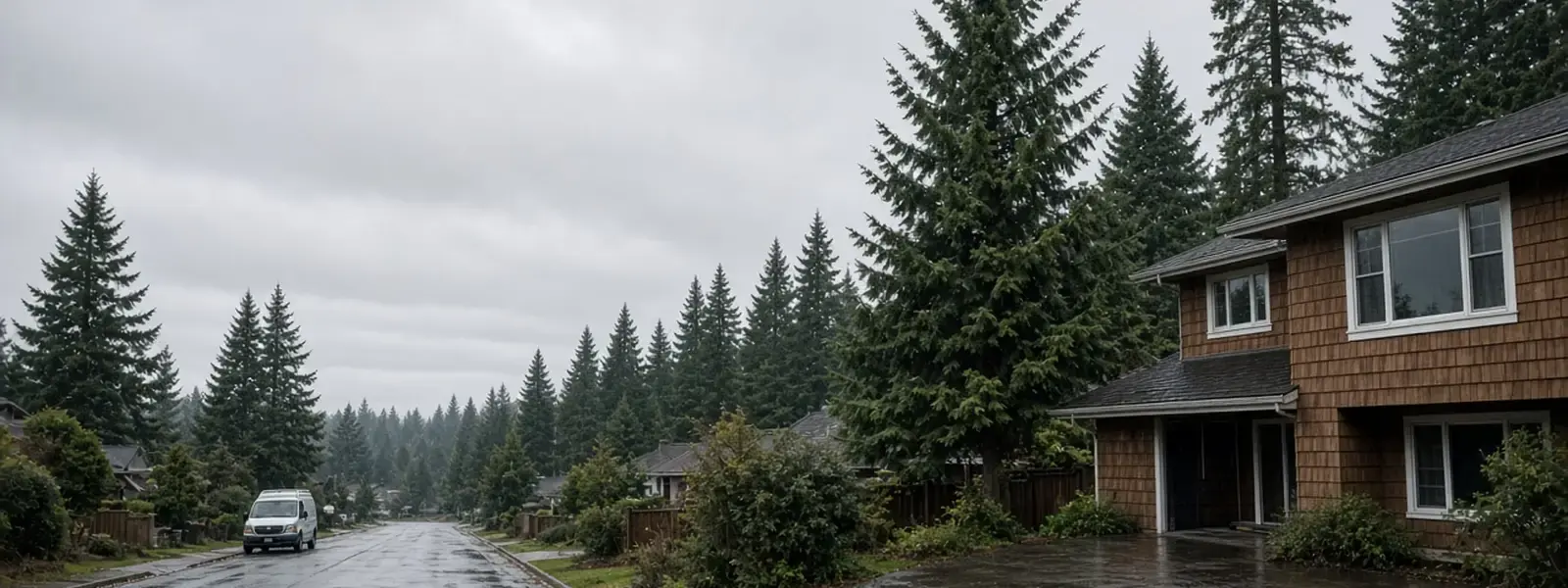
Langley houses sit on a wet Fraser Valley climate. Cedar siding, below-grade suites, and bath fans that stop in the attic give mold a steady water supply. Removal without drying just resets the clock.
What the visit includes
- Pin and scan moisture readings before any cut, so dry bays stay closed.
- Floor-to-ceiling poly and a zipper where the work can throw dust into a lived-in room.
- Selective demo of drywall, insulation, tack strip, and swollen MDF.
- HEPA vacuuming of the stud bay, plate, and the floor under the cut.
- Wire-brush or sanding of timber that can be saved, then a HEPA pass.
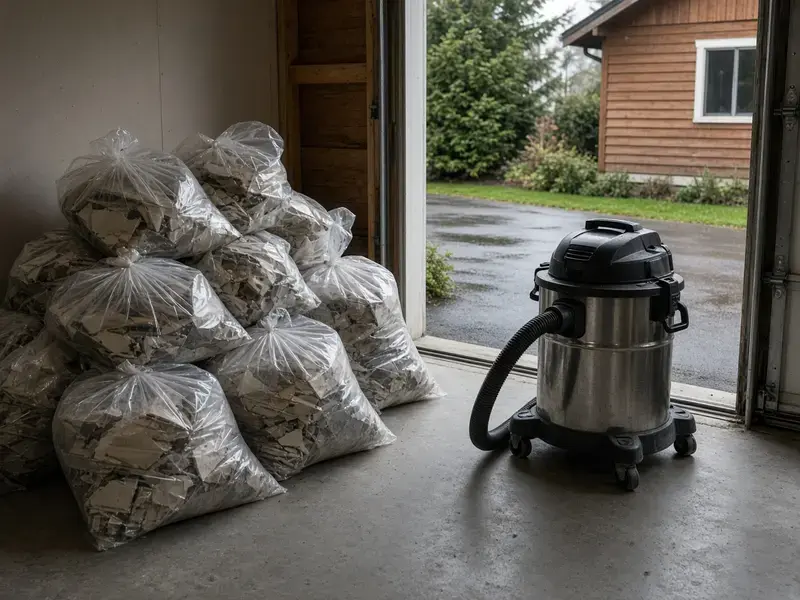
- Bag-out through the containment so spores are not walked through the hall.
- Drying of the opened cavity until framing moisture is back in a normal range.
- Photos of the cavity before it is closed, for you and for an insurer if you have a claim.
When Langley houses need this
Soft drywall along a basement slab
The bottom 30 centimetres goes first. Capillary water from a Langley slab wicks into the paper face, and the colony follows the paper. If the meter still reads high on the plate, cutting higher is the honest move.
A closet that smells after the laundry cycle
Stacked laundry in a small closet dumps litres of vapour if the dryer is not vented outdoors. The back wall grows behind the machine. Removal includes pulling the unit, opening the wall, and checking the vent hose.
Ceiling spots under a bathroom
A failed wax ring or a slow shower leak stains the ceiling below, then colonizes the gypsum. We open from the wet side, not from a pretty patch in the kitchen.
After a DIY fogger
Foggers knock down odour for a weekend. They do not remove paper that is already food. If someone already sprayed, we still open the soft spots and throw out the colonized board.
The sequence on site
1. Map it
Pin meter on the plates and a non-invasive scan across the field of the wall. Wet spots get marked. Dry spots stay. This is how a small closet job does not turn into a whole-floor gut.
2. Contain the cut
Poly, tape, and a HEPA vacuum at the saw. If the room shares air with a bedroom, the vacuum runs the whole time the board is coming off.
3. Remove the food
Gypsum, wet fibreglass, and crumbled MDF go into 6-mil bags. Timber is cleaned if the section loss is minor. Punky studs get noted so a carpenter can sister them later.
4. Dry the cavity
Air movers and a dehumidifier stay until the wood readings drop. Closing wet studs is how the next colony starts.
5. Leave a record
Photos, a sketch of what was removed, and the moisture numbers. You can hand that to a painter or an adjuster without us rewriting it.
Why crews call this a mold removal job
We cut what is wet, not what looks ugly
A shadow on paint is not a scope. The meter decides the cut line. That keeps the job smaller and the repair cheaper to rebuild.
HEPA at the source
A shop vac blows fine dust back into the room. Removal jobs use a HEPA vacuum on the cut and a second pass on the framing.
The water source is part of the visit
If the dryer vent, the grade, or a leaking valve is still feeding the wall, removal alone will not hold. We point at the source before we leave.
Written scope before the saw
You see which walls open and which stay. Surprises get a call, not a quiet extra room of demo.
The building science under the stain
Gypsum board is a sandwich of paper and a gypsum core. The paper is cellulose. Once it stays above about 16 percent moisture content for a few days, common indoor fungi treat it as food. Aspergillus and Penicillium show up first on the face. If the cavity stays saturated, darker slime molds can follow on the back of the board. Paint hides the face and does nothing to the back.
Fibreglass batts do not grow mold on the glass itself. The dust and the paper facing do. A batt that has been wet and has collapsed gets removed. Leaving it 'to dry' in a closed bay traps water against the sheathing, which is how Langley walls end up with mold on the plywood even when the paint looks fine.
Removal and remediation are searched as two different jobs, and they overlap. Removal is the physical takeout. If the area is larger than a small patch, or if the HVAC can move dust through the house, the work needs containment and negative air. That protocol is written up on our mold remediation page. Small, well-bounded cuts can stay as a removal visit. We say which one it is after the map, not from the driveway.
Fraser Valley winters are mild and wet. Indoor relative humidity in a closed Langley house often sits high enough that a cold exterior wall hits dew point. That is a different problem from a burst pipe, and the removal is smaller, but the drying target is the same: framing that will not feed a new colony the week after the paint goes on.
Fraser Valley coverage
Mold Removal provides coverage for Langley and extends through the Fraser Valley. The full town list is on the Areas page. The three we drive most are Surrey, Abbotsford and Coquitlam.
Questions on mold removal
Can you remove mold without replacing the drywall?
If the growth is on a hard surface and the meter says the board is dry, sometimes yes. If the paper is stained through or the board is soft, the board goes. Painting a soft sheet does not count as removal.
Do you remove mold from furniture?
Hard furniture can be HEPA-vacuumed and wiped. Upholstery and mattresses that smell and show growth are usually discarded. We will tell you which is which rather than pretend a wipe saves a soaked couch.
Is a fogger enough for mold removal in Langley?
No. A fogger is an odour treatment. Mold removal takes the colonized material out of the building.
Will the smell leave when the drywall is gone?
Most of it does, once the cavity is dry. If the smell stays, we look at the subfloor, the carpet pad, and the HVAC cabinet before anyone blames the paint.
Do you work basement suites?
Yes. A lot of Langley calls are secondary suites with one cold wall and a bathroom that shares a fan with the main floor.
If you can smell it from the hallway, call Langley Mold Remediation Services and say which room. We would rather open one wet wall than watch a fogger get sold to you twice.