Mold in walls in Langley hides until the paint blisters, the baseboard cups, or a smell lands in one corner of a bedroom. The cavity is a small climate of its own: sheathing, insulation, and the back of the drywall.
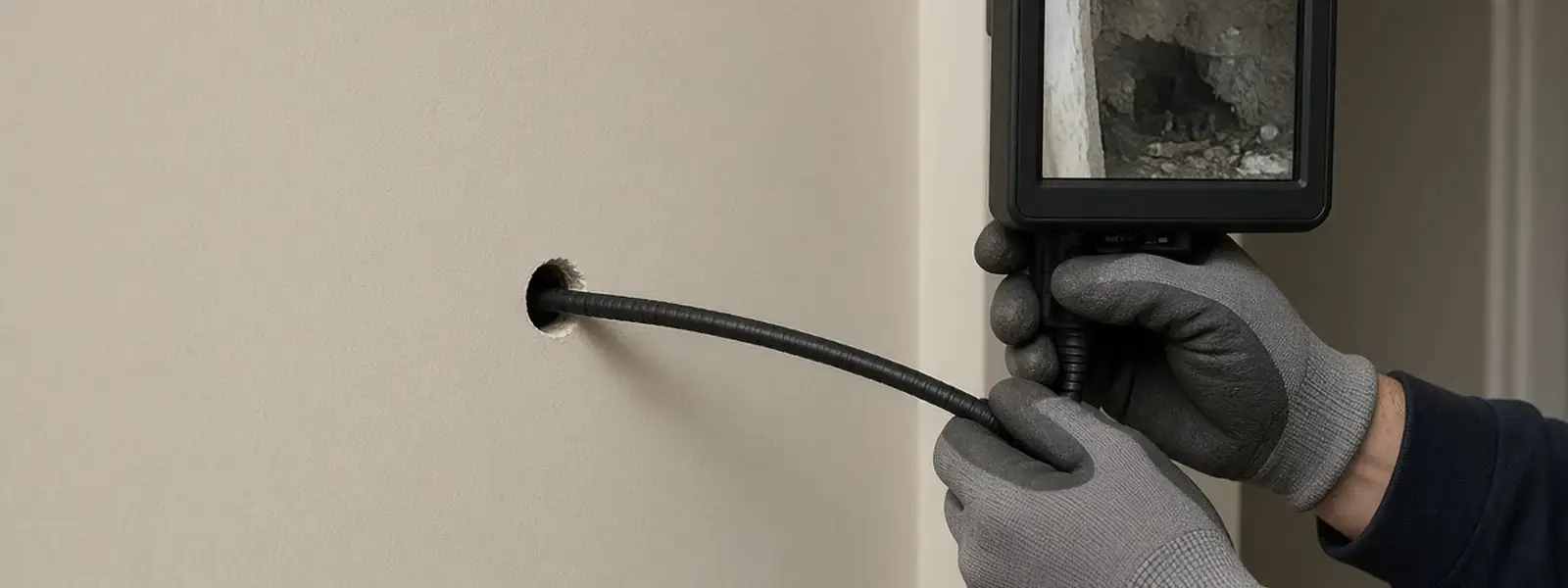
Opening every wall is how bills explode. A borescope and a moisture map let us open the bays that are wet and leave the ones that are only cold. Langley Mold Remediation Services would rather drill a small inspection hole than gut a bedroom on a rumour.
Wall cavities get wet from leaks, from wind-driven rain at a window, and from indoor air that finds a hole in the vapour control and condenses on the sheathing. The stain on the paint is the last chapter.
What the visit includes
- Non-invasive scan to sketch the wet shape.
- Pin readings at the plate and at the blister.
- Borescope through a small hole when the bay needs eyes, not a full opening yet.
- Selective demo of the colonized bays only.
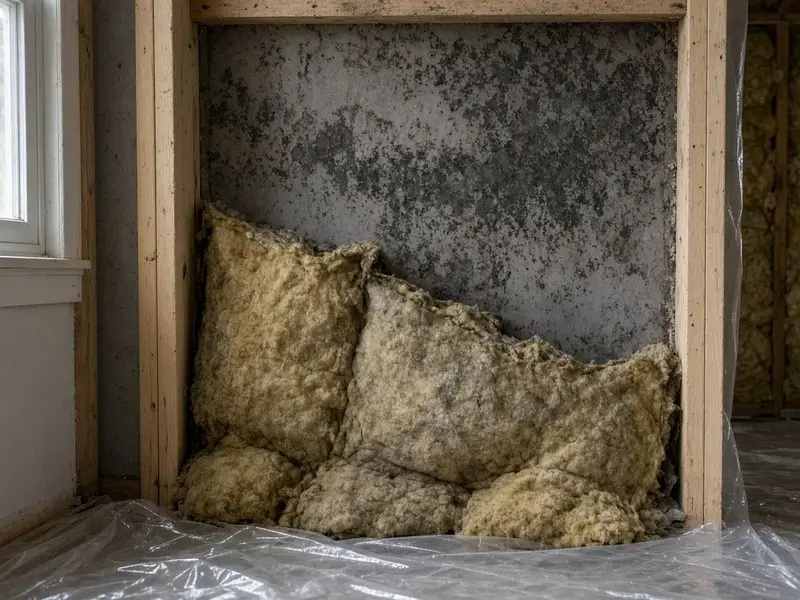
- Insulation removal in those bays if it is wet or paper-faced and growing.
- HEPA vacuum of studs and sheathing.
- Photos of the sheathing so you can see if it is stained or soft.
- A drying setup aimed into the cavity, not just at the room.
When Langley houses need this
One cold corner of a bedroom
North walls and closet corners. The cavity grows on the sheathing while the paint looks tired. The borescope earns its keep here.
Under a window that weeps
Failed flashing or a tired sill dumps water into the bay below the glass. The mold is a vertical streak in the insulation, not a random patch.
After a pipe was repaired
The plumber fixed the leak and closed nothing, or closed it wet. We open along the repair, meter past it, and remove what stayed damp.
A smell in a wall with no stain
Possible, especially at a rim or a shower. We do not open a whole elevation. We scope the likely bay and stop if it is clean.
The sequence on site
1. Sketch before the saw
Scan readings on tape on the wall, so you can see the shape. The cut follows the sketch.
2. Scope if the sketch is ambiguous
A small hole, a camera, a photo. If the bay is clean and dry, we patch the hole and do not invent a project.
3. Open the food
Drywall and wet insulation out. Sheathing cleaned if it is sound. Soft sheathing gets a carpenter or a building envelope note.
4. Dry the bay
Air into the cavity until the studs and the sheathing readings come down. Room air alone does not dry a closed stud bay.
5. Leave the photos
You should see the sheathing before new board hides it. That is the record that the cavity was actually addressed.
Why crews call this a mold in walls job
Selective opening
Bays are 14 or 16 inches wide for a reason. We follow the wet ones. Adjacent dry bays stay closed.
Borescope before commitment
When the outside of the wall is ambiguous, we look inside. The photo is yours.
Sheathing gets a verdict
Stained but sound is a clean. Soft is a building repair. We do not HEPA-vacuum rot and call it done.
Vapour control is discussed, not ignored
If we open a wall, we note whether a poly sheet was present and whether it was trapping water. The rebuild should not copy a bad sandwich.
The building science under the stain
A stud bay is a chimney for air if the plates are leaky. In winter, warm moist indoor air can be pulled toward cold sheathing. When it condenses, the insulation face against the wood gets the colony. This is common on north walls in Langley houses with tired air sealing. The paint can look acceptable for a long time.
Window leaks follow gravity and the flashing path. Water enters at the head or the jamb and shows up a foot below, which is why people open the wrong spot. The scan usually shows a vertical wet line. We follow that line, not the centre of the stain.
Fibreglass against wet sheathing holds water in the fibres because of dust and because the wood is touching it. Removing the batt in the wet bay is normal. Replacing insulation before the sheathing is dry recreates the sponge.
Exterior rain screen failures on newer builds are a related but different wall. If we open from the inside and see a soaked sheathing with no interior plumbing, the envelope is the source. We will say you need a building envelope look outside, and we will still remove the interior colony that already grew.
Fraser Valley coverage
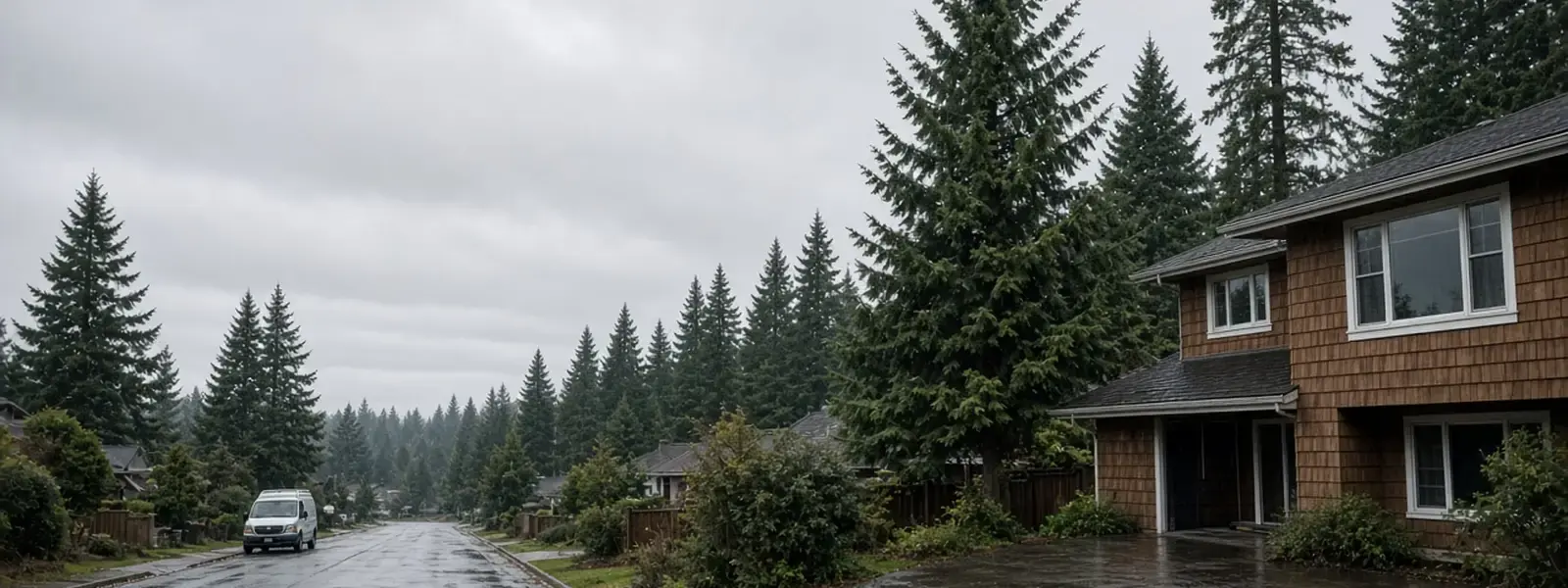
Mold in Walls provides coverage for Langley and extends through the Fraser Valley. The full town list is on the Areas page.
Questions on mold in walls
How do you know mold is inside the wall?
Moisture pattern, sometimes a smell at an outlet, and a borescope photo. We do not claim a cavity is colonized from a living-room air test alone.
Will you cut a hole in every stud bay?
No. Dry bays stay closed. The sketch and the scope decide.
Can mold in walls spread through the house?
Air leaks at outlets and plates can move odour and dust. That is a reason to contain the demo. It is not a reason to gut every room.
Do you repair the drywall after?
We leave the bay clean and dry and say what was removed. Finish carpentry and paint can be scheduled after the readings are down. We do not close wet wood to hit a paint date.
What if the sheathing is black but hard?
Sound wood can be cleaned. We photograph it. Colour alone is not rot.
Call Langley Mold Remediation Services when one corner smells and the paint is only starting to complain. A small scope is a better first spend than a full bedroom demo.