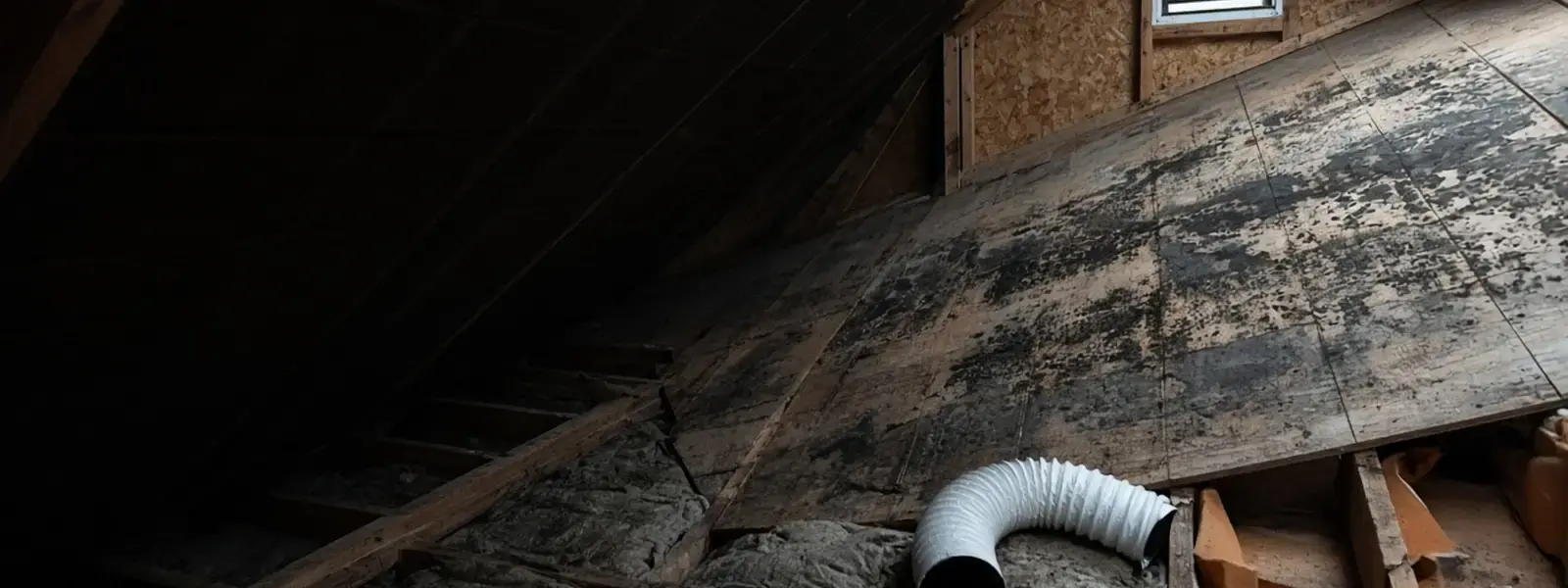
Attic mold removal in Langley is almost always a ventilation and moisture-load problem on the roof sheathing. The plywood or OSB looks shadowed, the nails sweat, and a bathroom fan has been blowing into the attic since the house was built.
People notice it when they lift the hatch for Christmas boxes, or when a roofer points at the deck. The living room can smell fine while the sheathing is growing. Langley Mold Remediation Services reads the attic before anyone talks about spraying the wood black to 'seal' it.
Wash and stain-blocking paint on sheathing is a cosmetic step some roofs get after the ventilation is fixed. It is not a substitute for finding the fan, the bath humidity, or the blocked soffits that caused the wetting.
What the visit includes
- Hatch inspection with humidity, temperature, and a look at the sheathing.
- Trace of every bath and kitchen fan to see if it actually leaves the building.
- Check of soffit baffles, ridge or roof vents, and insulation covering the soffit.
- HEPA vacuum of loose growth on wood that is still structurally sound.
- Removal of wet, ruined insulation under a leak, which is different from sheathing stain.
- Photos a roofer can use if the deck is punky.
- A plain note on what has to change so the attic dries next winter.
- Containment at the hatch so attic dust does not dump into the hall.
When Langley houses need this
The bathroom fan ends in the attic
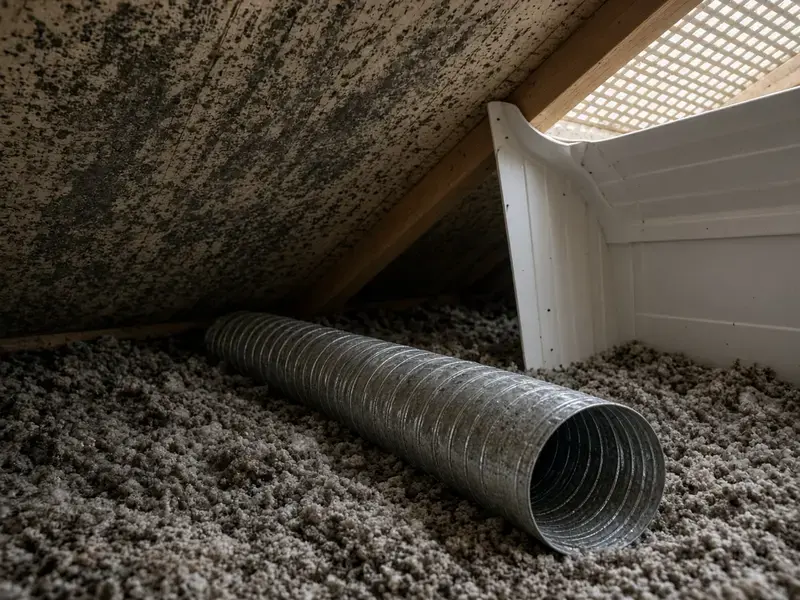
A flex duct lying on the insulation is the most common Langley finding. Every shower loads the roof deck. We document the termination and the stain pattern under it.
Soffits buried in insulation
No air in, no air out. The deck stays damp. Baffles are a building fix. Mold removal is the clean after the path is open, not instead of it.
A roof leak that was patched
Localized black sheathing under a former leak, with dry wood around it, is a different shape from uniform attic condensation. We say which pattern we see.
A home inspector's photo
Buyers get a scary picture and no readings. We go in the hatch, meter the wood, and separate light surface stain from a deck that needs a roofer.
The sequence on site
1. Read the pattern
Uniform shading on the north slope points at condensation. A dark oval under a boot or a valley points at a leak. The removal plan follows the pattern.
2. Protect the house below
The hatch gets a barrier. Attic dust is insulation fibre plus whatever is growing. We do not track it down the stairs.
3. Clean sound wood
HEPA vacuum and, where it is appropriate, a controlled clean of the face of the sheathing. Punky wood is a roofer's call. We do not pretend a vacuum fixes rot.
4. Pull ruined insulation
Wet cellulose or compacted batts under a leak come out. Dry insulation that is only dusty can stay. Covering a wet patch with new fluff hides the leak.
5. Name the vent fix
Fan to the exterior, baffles cleared, maybe a roofer for a boot. Until that happens, cleaning the deck is temporary.
Why crews call this a attic mold removal job
We do not fog an attic and leave
An attic fog with the fan still dumping in the bay is a smell treatment. The sheathing will mark up again.
Roofers and mold crews are different
If the OSB is soft, you need a roof deck repair. We will say that clearly instead of selling a clean on rotten wood.
Hatch containment
The hallway stays clean. That is a small detail people notice, and it is the difference between a careful attic visit and a dusty house.
Pattern before product
Condensation, leak, or both. The photos should let you see it. If we cannot tell, we say the access or the light was not enough.
The building science under the stain
Bathroom air is the dominant winter load in a lot of Langley attics. A family of four can put several litres of water into the air each morning. If that duct ends above the insulation, the vapour hits cold plywood and condenses on the nails first. Rusty nail tips and a grey deck are the early sign, before a thick colony.
Soffit-to-ridge ventilation only works if the soffit is open and the insulation is held back with baffles. A common re-insulation job buries the soffit. The attic then becomes a still box. Uniform mold on the sheathing, heavier on the north side, is the usual picture. Spot-cleaning without baffles does not change the physics.
OSB and plywood behave differently once they have been wet for years. Surface fibres can be cleaned. Delamination is a structural question. We photograph soft spots and stop. Recommending a roof deck replacement is not an upsell when a screwdriver sinks in.
Attic hatches in older Langley houses are often uninsulated and leak house air, which is another moisture source right at the opening. We note the hatch. Weatherstripping and insulation on the lid are cheap compared with another sheathing clean.
Fraser Valley coverage
Attic Mold Removal provides coverage for Langley and extends through the Fraser Valley. The full town list is on the Areas page.
Questions on attic mold removal
Can you remove attic mold without replacing the roof?
If the wood is sound and the cause is ventilation, often yes. If the deck is rotten, a roofer has to replace that section. Cleaning rotten OSB is not a repair.
Is attic mold dangerous to the rooms below?
A tight ceiling limits air exchange, but hatch leaks and can lights can connect the spaces. We contain the hatch during work. Whether you sleep downstairs during a small clean is usually fine. We will say if the ceiling plane is full of holes.
Why is it worse on one side?
North slopes and the area under a dead fan stay colder and wetter. The pattern is a clue, and we photograph it.
Should insulation be removed?
Only where it is wet, moldy, or blocking the soffit. A full attic vacuum of dry insulation is a different project and we will not pretend you need it by default.
Do you install the new bath fan duct?
We identify the bad termination and can coordinate the exterior vent. If the electrical or the roof boot is a separate trade, we say so in the note rather than leaving a duct aimed at the sheathing.
If the hatch smells like a wet forest, call Langley Mold Remediation Services before you buy an attic fogger. Tell us whether a roofer already sent a photo.