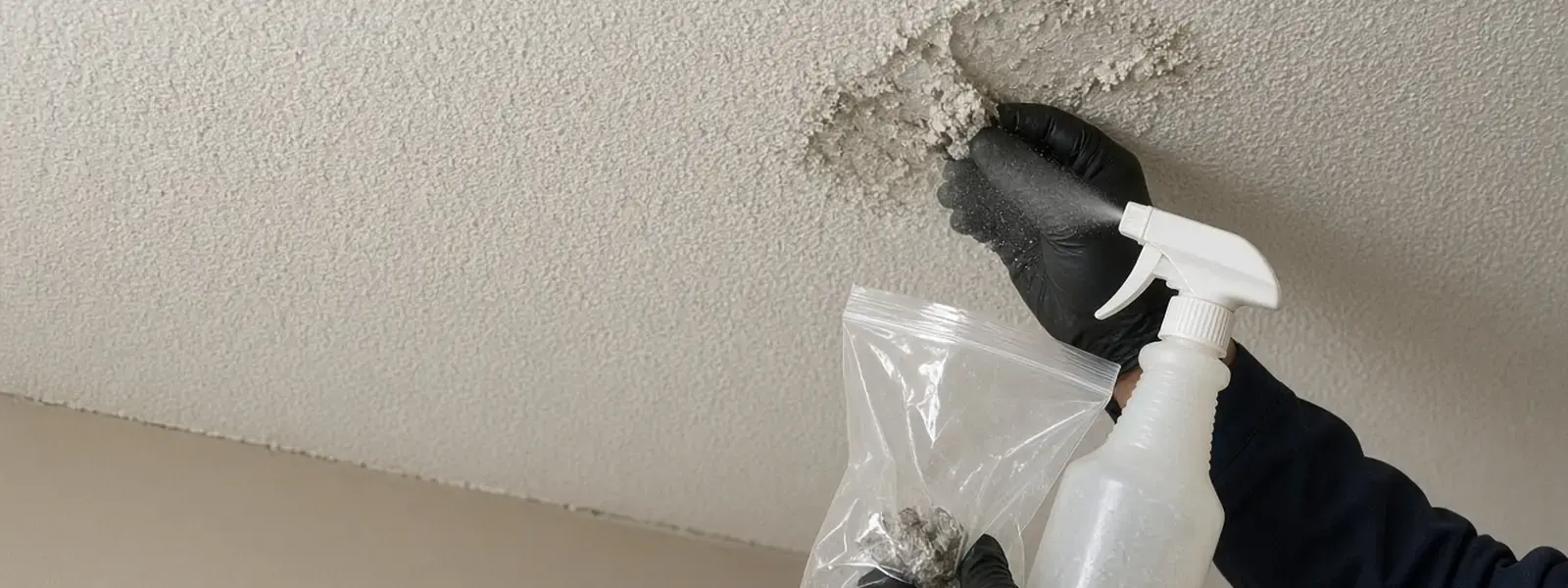
Asbestos testing in Langley is a bulk sample of a building material, wetted, bagged, and read by a lab. It is the step before you scrape a popcorn ceiling, lift old tile, or cut drywall mud in a house built before 1990.
British Columbia treats many materials in pre-1990 buildings as suspect until a sample says otherwise. Mold crews hit those materials constantly, because the ceiling we need to open is the ceiling that might contain asbestos. Langley Mold Remediation Services samples before the disturbance, not after the dust is on the floor.
A lab certificate names the material and whether asbestos was detected. That certificate is what a mold or reno plan has to respect. Guessing from the year of the house is not a test.
What the visit includes
- A look at which materials the planned work will disturb.
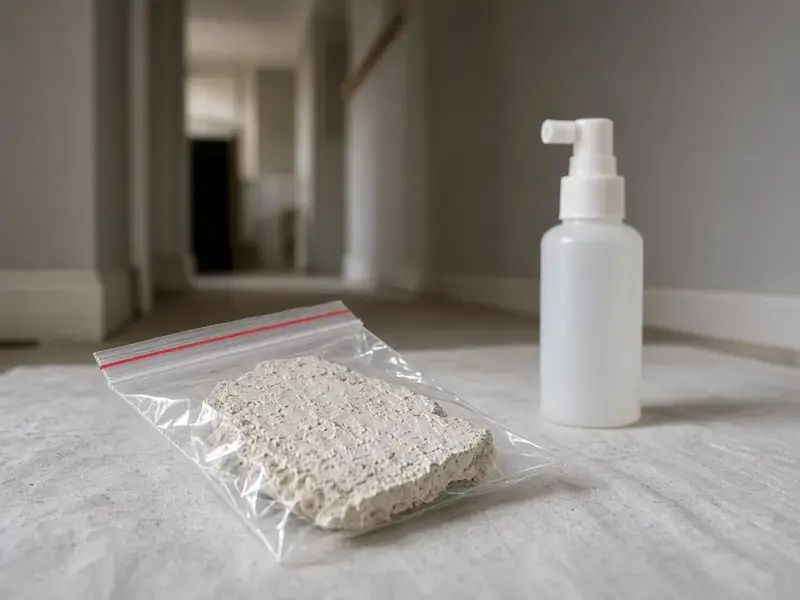
- Wetting and small bulk samples of those materials.
- Separate samples where the tile, the mastic, and the mud are different layers.
- Labelled bags and a request that matches the material.
- A lab that reports asbestos minerals, not a mold spore count. Different test.
- A plain read of the certificate.
- A stop-work recommendation if the result is positive and the plan was to demo dry.
- Photos of sample locations so the next trade knows which ceiling was tested.
When Langley houses need this
Popcorn ceiling before mold demo
The stain is in a textured ceiling from the 1970s or 80s. We sample the texture before anyone scrapes. A mold cut through positive texture is an asbestos incident.
Sheet flooring in a wet bathroom
Old vinyl and the black mastic under it are classic suspect materials. Water damage wants the floor up. Testing wants a sample first.
Drywall mud in a pre-1990 patch
The board may be new and the mud old, or the reverse. Joint compound is a known suspect. We sample the mud the saw will hit.
A buyer who wants the ceiling named
Before they sand it themselves. One sample is cheaper than a contaminated reno. We still sample what will be disturbed, not every material in the house for sport.
The sequence on site
1. List the disturbance
What are you actually going to cut, sand, or scrape? That list is the sample list. Untouched materials can stay untested.
2. Wet sample
A small piece, wetted to keep fibres down, into a bag. We do not dry-scrape a dinner-plate area and call it a sample.
3. Layer the samples
Tile is not the glue. Texture is not the board. If both will be disturbed, both can need a sample.
4. Send and wait
The lab reports detect or non-detect, often with a percent. We do not guess ahead of the PDF.
5. Apply it to the mold plan
Non-detect means the mold demo can proceed with normal containment. Detect means asbestos removal rules apply before or as part of the disturbance.
Why crews call this a asbestos testing job
Mold labs and asbestos labs are different
A spore trap will not tell you about chrysotile in the ceiling. We order the right test.
Small, wet, located
You get a photo of where the sample came from. A bag with no location is a weak record.
We sample the work, not the whole house
If you are opening one bathroom, we do not need every soffit in the attic. If you are sanding every ceiling, the conversation changes.
Positive means stop the casual demo
We will not keep cutting because the schedule is tight. The certificate outranks the calendar.
The building science under the stain
WorkSafeBC expects identification of asbestos-containing material before demolition or renovation disturbs it in buildings of that era. The practical cutoff people use is construction before 1990, with some later materials still worth a question. Langley has a large stock of 1970s and 1980s houses, which is why this test shows up on ordinary mold calls.
Common positives in this region include ceiling texture, vinyl sheet flooring, mastic, older drywall joint compound, and some insulation products. Not every house has them. Not every texture is positive. The only way to know the ceiling in front of you is to sample that ceiling.
Point counting and polarized light microscopy are the usual lab methods you will see on a certificate. The report may say chrysotile, amosite, or another mineral. For the homeowner the actionable line is whether it was detected in the material we are about to disturb.
A negative sample is specific to the material sampled. A different ceiling in a different reno can be a different batch of texture. We do not treat one bathroom certificate as a passport for the whole street.
Fraser Valley coverage
Asbestos Testing provides coverage for Langley and extends through the Fraser Valley. The full town list is on the Areas page.
Questions on asbestos testing
Do I need asbestos testing before mold removal?
If the mold work will disturb suspect material in an older house, yes. If we are only cleaning a glass tile surface, probably not. We will say which materials the saw will hit.
How many samples?
Enough to cover the different materials being disturbed. One homogeneous ceiling might be one sample. Tile plus mastic is often two.
Can you tell by looking?
No. Age is a reason to test. It is not a result.
What if it is positive?
Disturbance has to follow asbestos removal practices. That may be a different scope than the mold visit. We will not dry-scrape it.
Is this the same as an air test for asbestos?
No. Bulk sampling identifies the material. Air monitoring is a different tool used during some removal work. Most homeowners start with the bulk sample.
If the ceiling is textured and the house is older than 1990, call Langley Mold Remediation Services before anyone scrapes it. Say which room you plan to open.