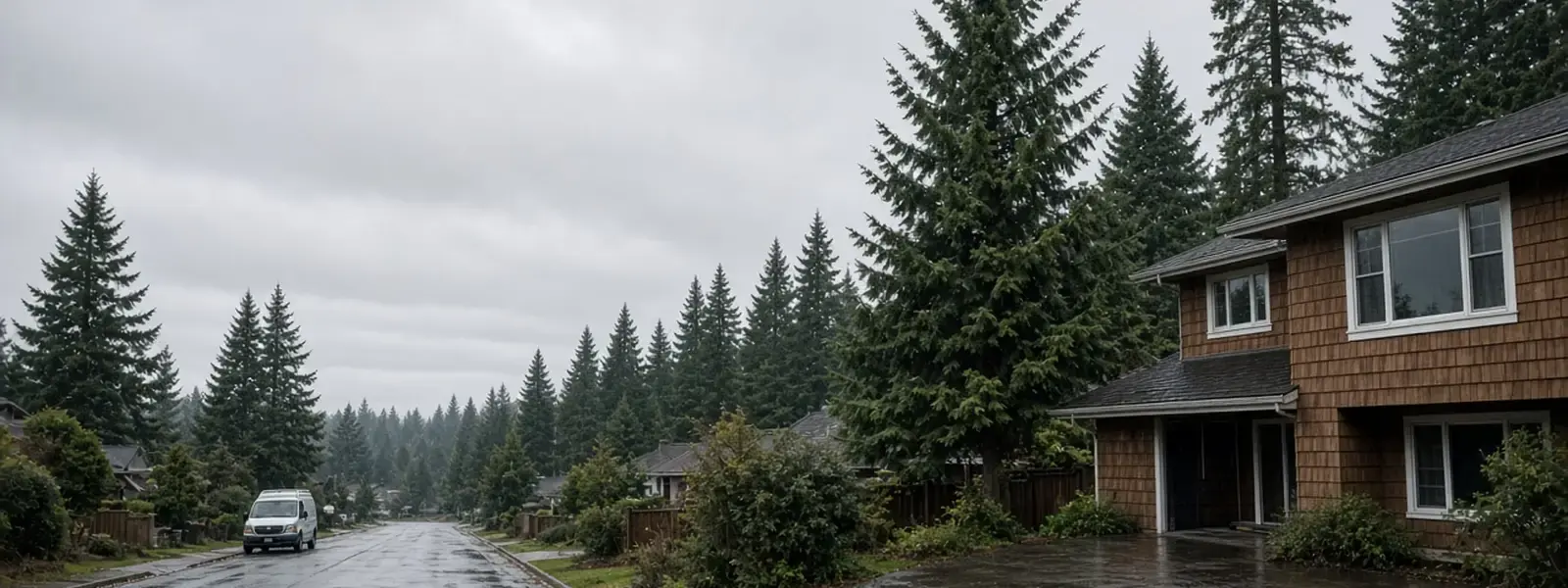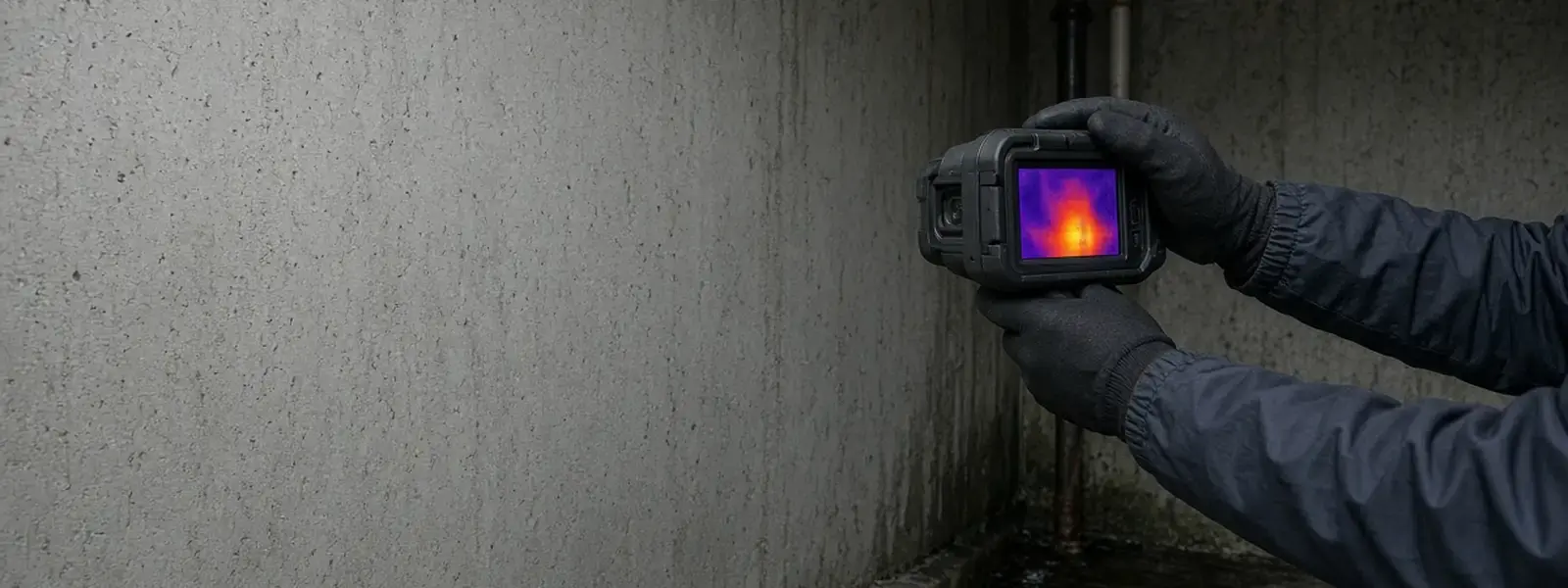
A mold inspection in Langley is a building investigation. We are looking for water, cold surfaces, and the path air takes through the house. The flashlight matters less than the meter.
Visible mold is the easy part. The calls that waste money are the ones where someone samples the living room and never opens the access for the crawl space or the attic hatch. Langley Mold Remediation Services starts at the complaint, then follows gravity and vapour.
You leave with a map: which walls are wet, which are dry, what we could see in the attic or crawl, and what we would open if you hire the removal. An inspection is allowed to end with 'this is dirt' or 'this is a plumbing leak, call a plumber first.'
What the visit includes
- Interior relative humidity and temperature, so we know if the house is just closed up.
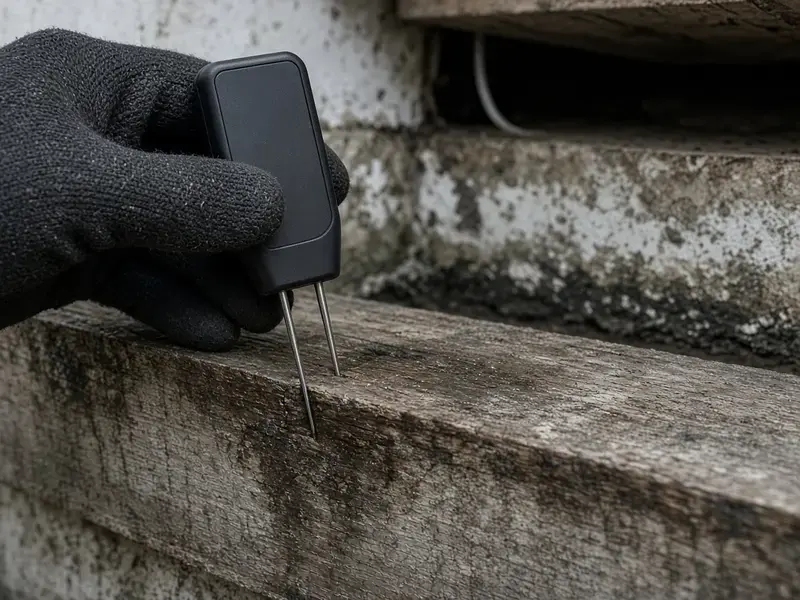
- Pin readings on plates, sills, and any soft trim.
- Non-invasive scan across walls to find the shape of the wet area.
- Thermal camera pass on cold corners, rim joists, and ceiling lines.
- Attic hatch check for bath fan terminations and sheathing stain.
- Crawl space or mechanical room check when access exists.
- A look at grade, downspouts, and obvious plumbing.
- A written list of what to open, what to leave, and what another trade should fix.
When Langley houses need this
Musty smell, nothing to point at
We chase the smell to a cold closet, a return boot, or a carpet on concrete. The inspection is the search. Testing comes after we have a target.
Buying a Langley house
Home inspectors flag stains. We follow the stain with meters. A pink insulation note in an attic is a ventilation finding, not automatically a remediation.
The stain came back after paint
That is unfinished water. The inspection finds whether it is still wet and whether the source is above, beside, or under the patch.
A suite tenant complaint
Landlords need a record that is more than a text message. The inspection notes room, readings, and photos without turning into a legal opinion.
The sequence on site
1. Interview the water
When did the smell start, what was the weather, did a toilet overflow, is the suite newer than the house. Ten minutes of history saves an hour of random holes.
2. Measure the shell
Humidity, temperature, and surface readings. A house at 70 percent relative humidity all winter will grow window mold even if every pipe is perfect.
3. Map the complaint wall
Pin and scan. Thermal images show the cold shape. We photograph the meter on the spot so the number has a location.
4. Check the usual Fraser Valley hiding spots
Attic bath fans, crawl rim joists, below-grade carpet, and the HVAC cabinet. Those four explain a huge share of Langley inspections.
5. Write the next step
Open this bay. Dry this corner. Fix this fan. Or stop, because the mark is shadow and the wood is dry. You should be able to hand the note to the next trade.
Why crews call this a mold inspection job
Meters before opinions
We do not diagnose from the driveway. If we cannot access the attic or the crawl, the report says the inspection was partial.
Thermal cameras are a clue, not a verdict
A cold spot can be missing insulation. We confirm with a moisture meter before anyone calls it mold.
We separate trades
A failed shower valve is a plumber. A grading problem is a landscaper or a drain crew. We inspect the mold conditions and name the other fix.
Photos with numbers
Every wet spot we care about has a photo and a reading. 'Seemed damp' is not a report.
The building science under the stain
Non-invasive meters read a radio field into the wall. They are good at shape and bad at exact percent. Pin meters measure conductance between two pins and are better on wood. A proper inspection uses both: scan to find, pin to confirm. Quoting a single percent from a scan-only pass is sloppy.
Thermal imaging shows surface temperature. Wet drywall can look cool because evaporation steals heat, and missing insulation looks cool because the outdoors is cool. In a Langley January those patterns overlap. The meter breaks the tie. We do not sell a thermal image as a mold test.
Dew point is the practical attic and closet concept. If indoor air at 21°C and 60 percent relative humidity hits a surface near 13°C, water condenses. North closets on exterior walls, window frames, and uninsulated attic hatch trims do this all winter. The inspection looks for those surfaces before it looks for a villain fungus.
Access limits are part of the job. A finished basement with no attic hatch and a screwed-down crawl panel cannot be fully inspected. We say what we did not see. Guessing a colony behind a wall without a reading is how inspection reports become fiction.
Fraser Valley coverage
Mold Inspection provides coverage for Langley and extends through the Fraser Valley. The full town list is on the Areas page.
Questions on mold inspection
Is an inspection the same as mold testing?
No. Inspection is the moisture map and the visual search. Testing is a lab sample. Many houses need the inspection first. Some need both.
How long are you on site?
It varies with access. A condo with one stain is shorter than a house with an attic and a crawl. We do not pad the visit to hit a clock.
Do you inspect rentals?
Yes, with the owner's permission to access attics, panels, and suites. We write findings about the building, not about the people living there.
Can you see inside walls?
A borescope can, through a small hole, when the meter says the bay is worth opening a peek. We do not drill a grid of holes for sport.
What if you find asbestos materials while looking?
We stop cutting. Pre-1990 texture, tile, and mud get a bulk sample conversation before demo. Inspection photos can flag it. Removal is a different visit.
Book the inspection with Langley Mold Remediation Services when the smell has no obvious patch. Bring the storey of when it started. That story is half the map.